
The first Post Office in Doncaster opened in 1860, with Joseph Pickering as Postmaster, and was located in a general store built on the front of Dodd’s wine shop. Prior to this, mail had to be collected first in Melbourne and subsequently at Kew.
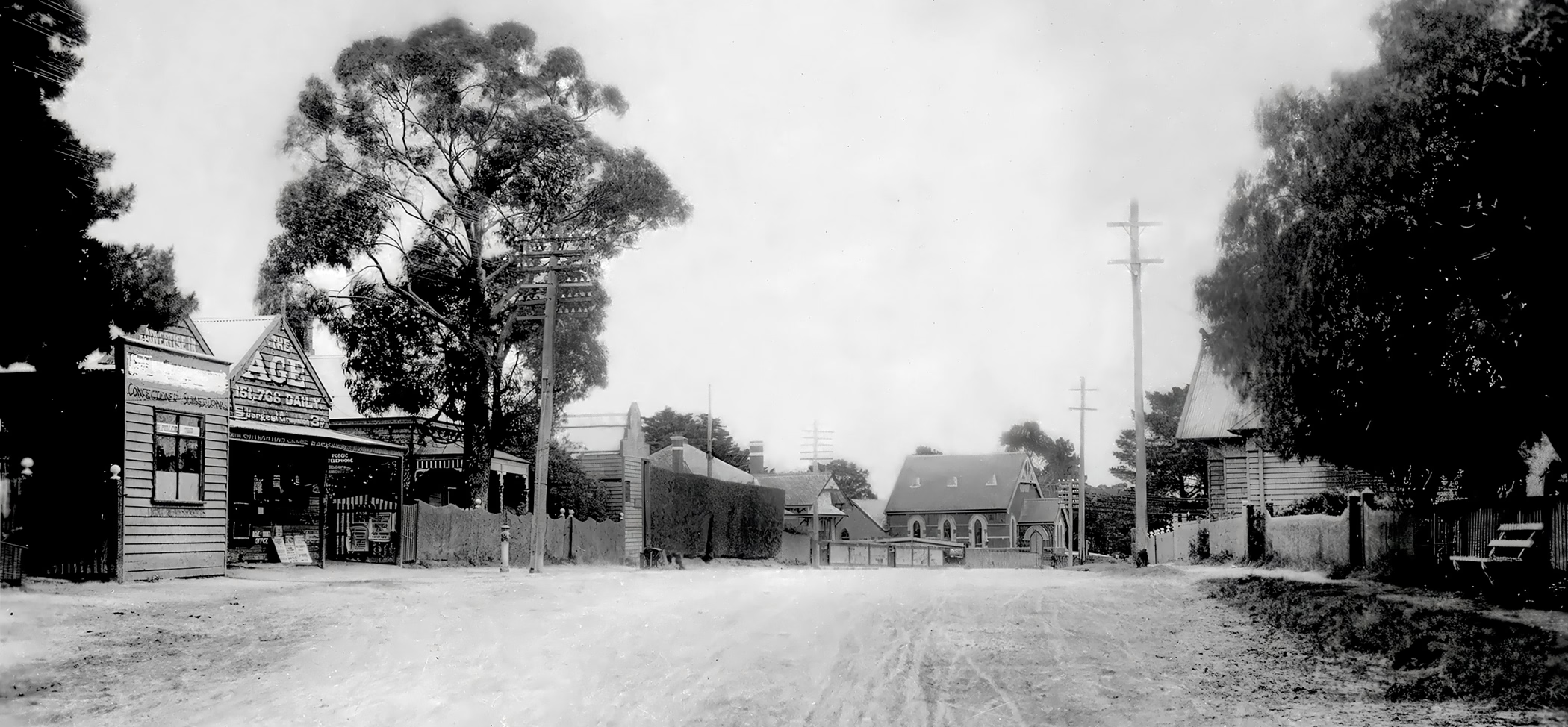
Main road Doncaster c.1920
The Post office on the left, then postmaster Fidler’s [1922-27] house, Thomas Hope’s old “Cockatoo store” used by Red Cross during WW1, John Petty’s hedge, John Tully’s house [1916-24] (that later became Dr Commons), Church of Christ and on the right side of the road the E,S&A bank.
In 1861, the Post Office was taken over by Thomas Grant, a Baptist minister. When he left the district in 1865, Joseph Pickering again oversaw mail arrangements until 1868, when Matthew Hoare, licensee of the Doncaster Arms Hotel, was appointed. The Post Office then moved to the hotel. The mail arrived by horseback en route to Warrandyte. When Matthew’s children arrived home from school, they were sent out to deliver letters that had not been collected during the day.
In 1871, the Post Office returned to Pickerings Store. Joseph Pickering had passed away the year before, and his son, John, was now running the business. James Gill was appointed Postmaster in 1872, and in 1875, James Culliford purchased the store and assumed the role of Postmaster.
The following year, Henry Reynolds came to Doncaster from Collingwood and took over the general store. He was Postmaster for 30 years when the Shire of Doncaster was formed. In 1891, Reynolds was elected to the newly formed municipal council. On his election, he declared, “I will give the same service on the Council as I have given the people of Doncaster for the past sixteen years”.
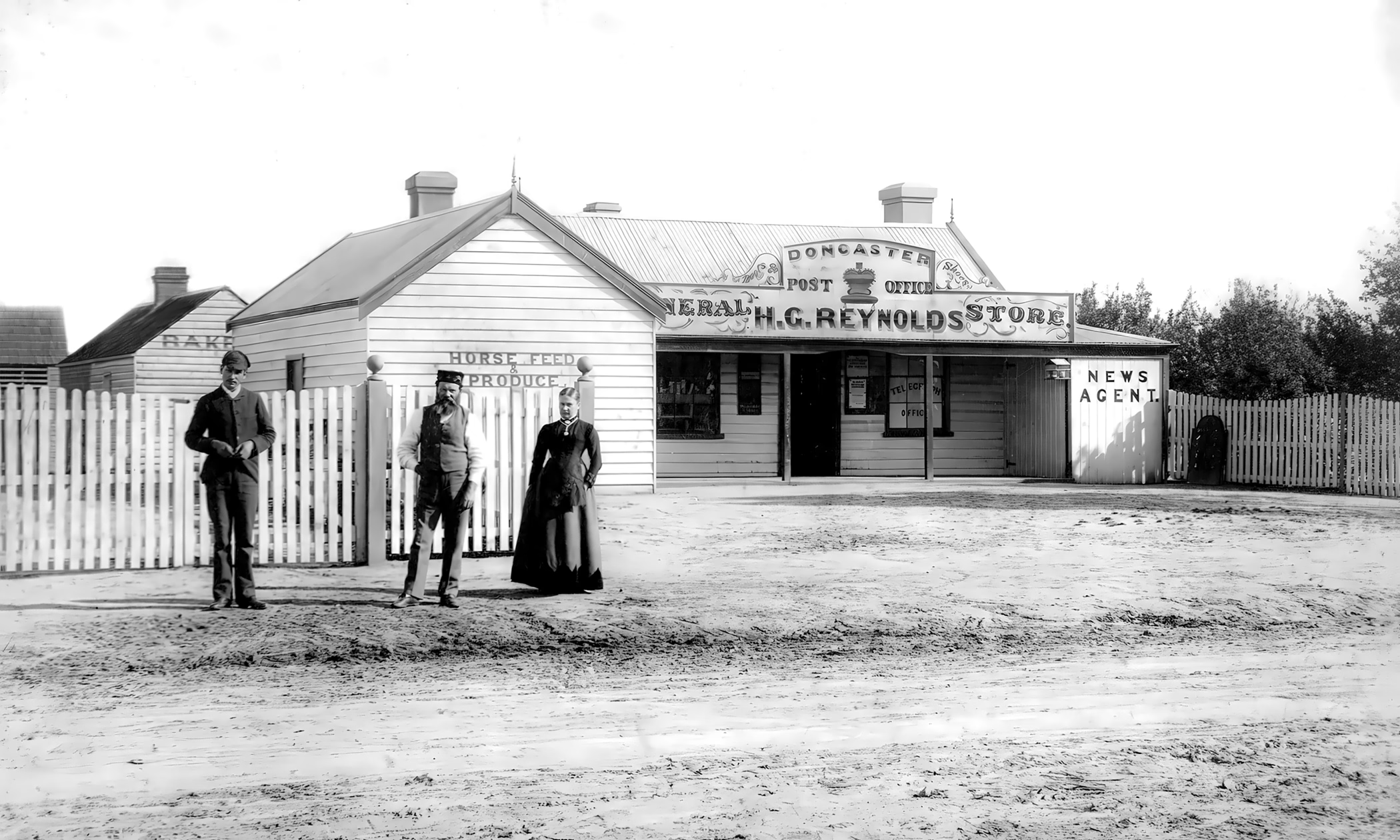
Doncaster Post Office and General Store c.1890
Henry (jnr) “Harry” Reynolds – Henry George Reynolds – Anne Louisa Reynolds (Higgs)
Reynolds advertised himself as a grocer, draper, general storekeeper, and boot and shoe dealer. When he travelled to Melbourne to collect supplies for the store, he used to carry parcels for a fee. In 1900, Henry Reynolds’ son Harry went to Melbourne to learn Morse code in preparation for the telegraph being installed at Doncaster. The store then became a Post and Telegraph office.
When Henry Reynolds retired, his daughter, Beatrice, and her husband, Ted Symons, took over the store and renamed it Symons Store. Additions were made to the front of the building to include a grocery section. Ted Symons enlisted during World War I and was sent overseas, but died of asthma on the ship.
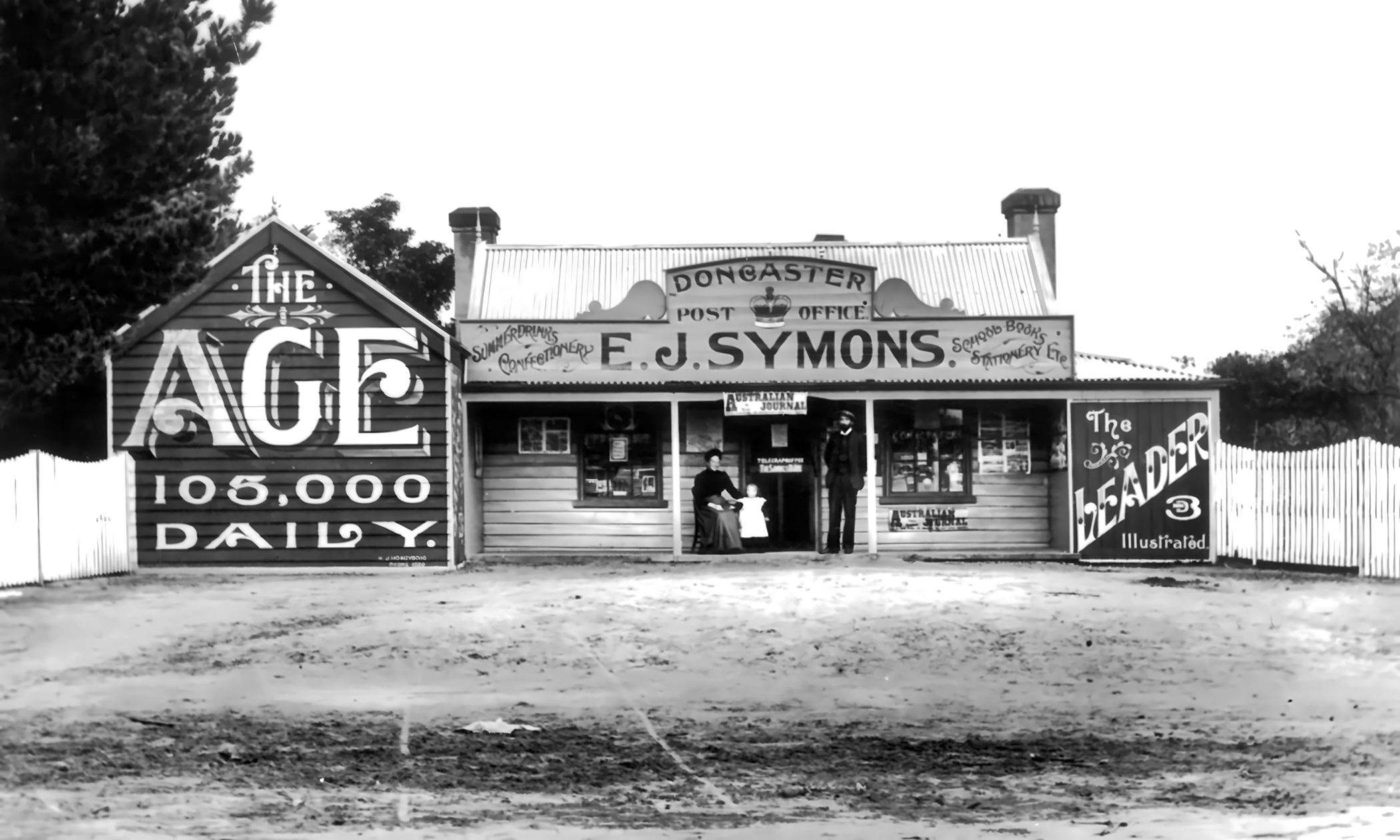
Doncaster Post Office 1907
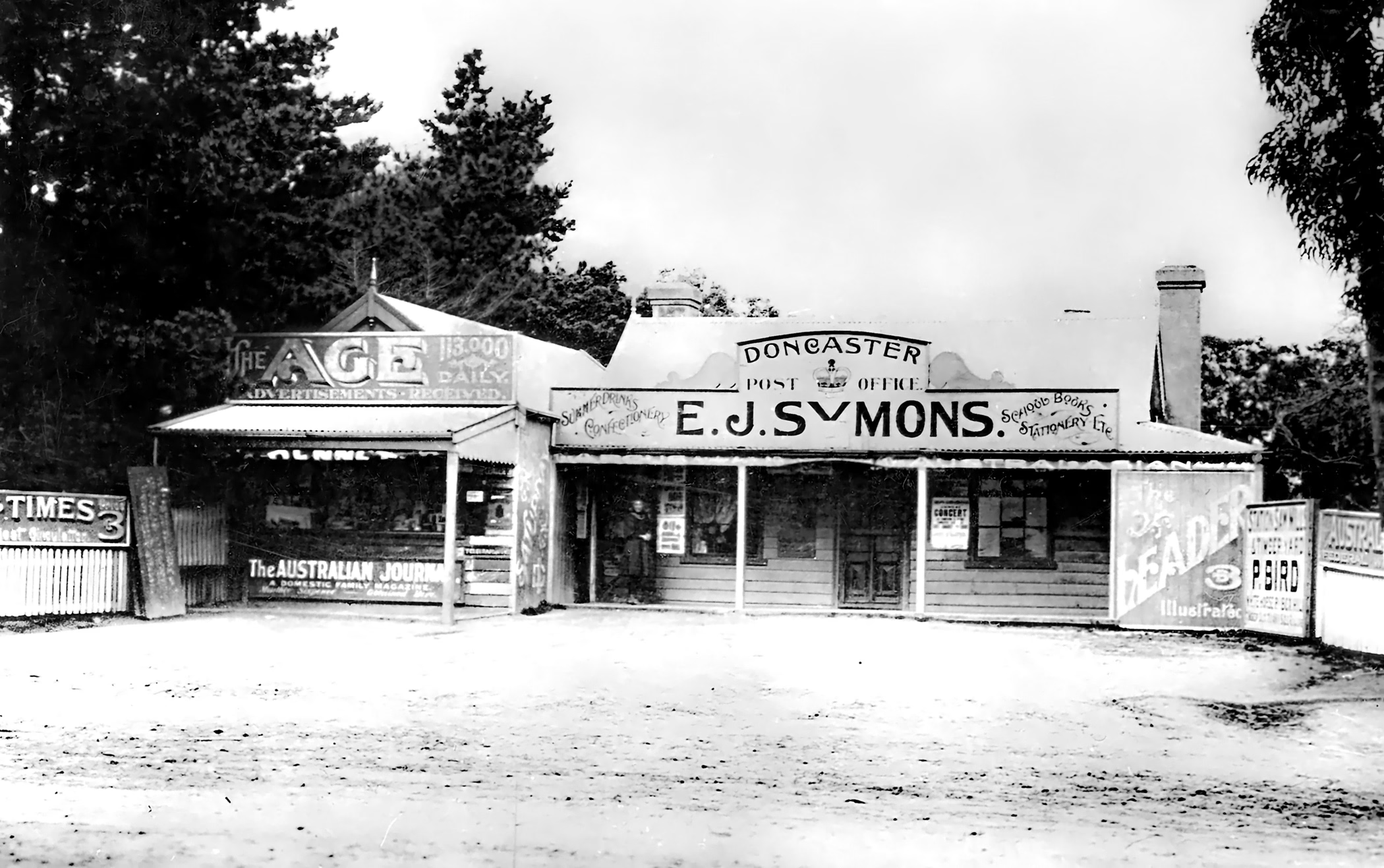
Doncaster Post Office 1914
The work of running the business eventually became too much for Beatrice, so in 1917, E. Rolf took over the grocery section.
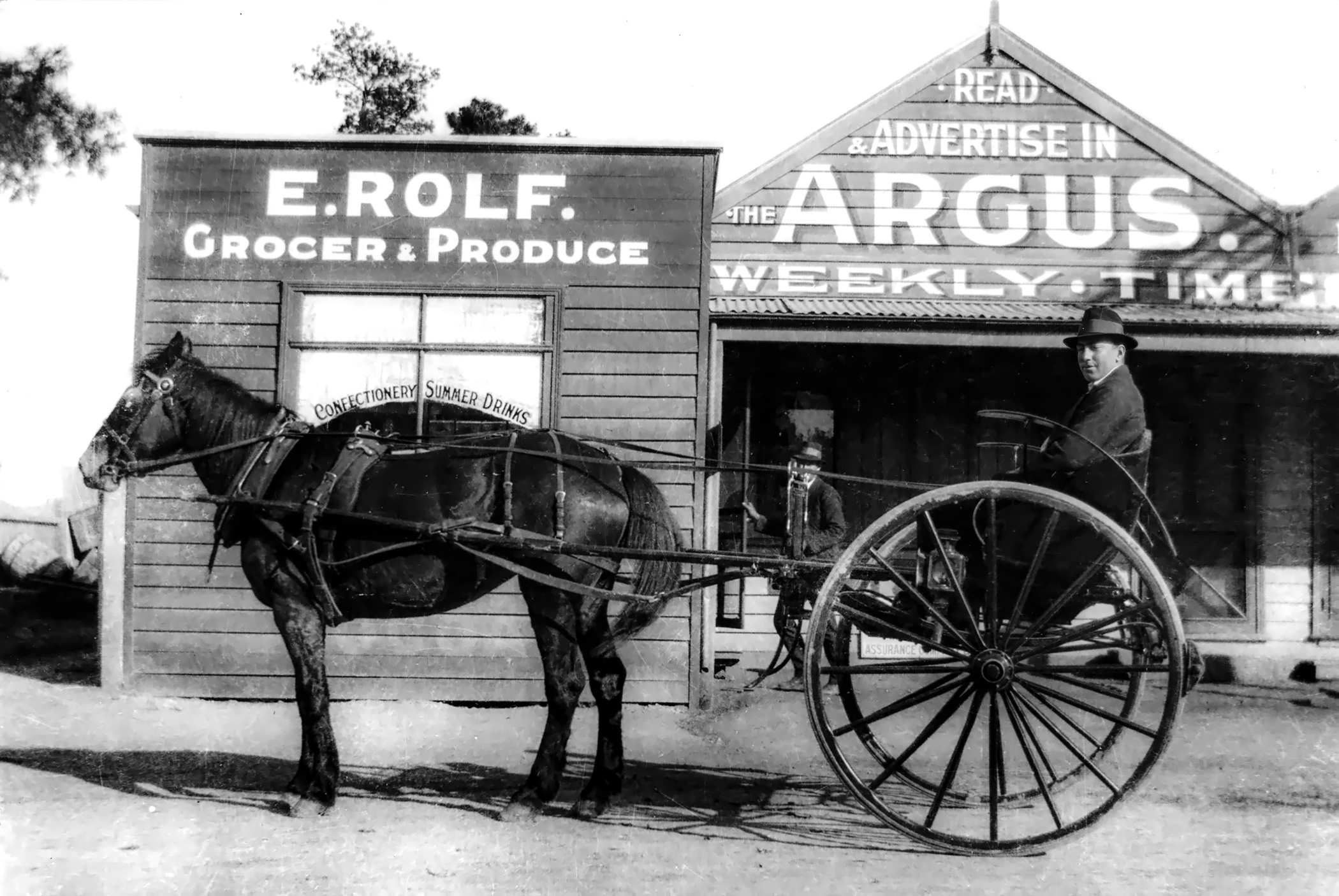
The man [Horace Corbett] in the Jinker. – Photo by Miss Selina Serpell. c.1920s
In 1919, a public phone was installed at the Post Office. It was a party line shared with the Cool Store and was operated from the Box Hill exchange. Fruit growers, who supplied jam factories, requested the phone, for they needed to keep in touch with the factories.
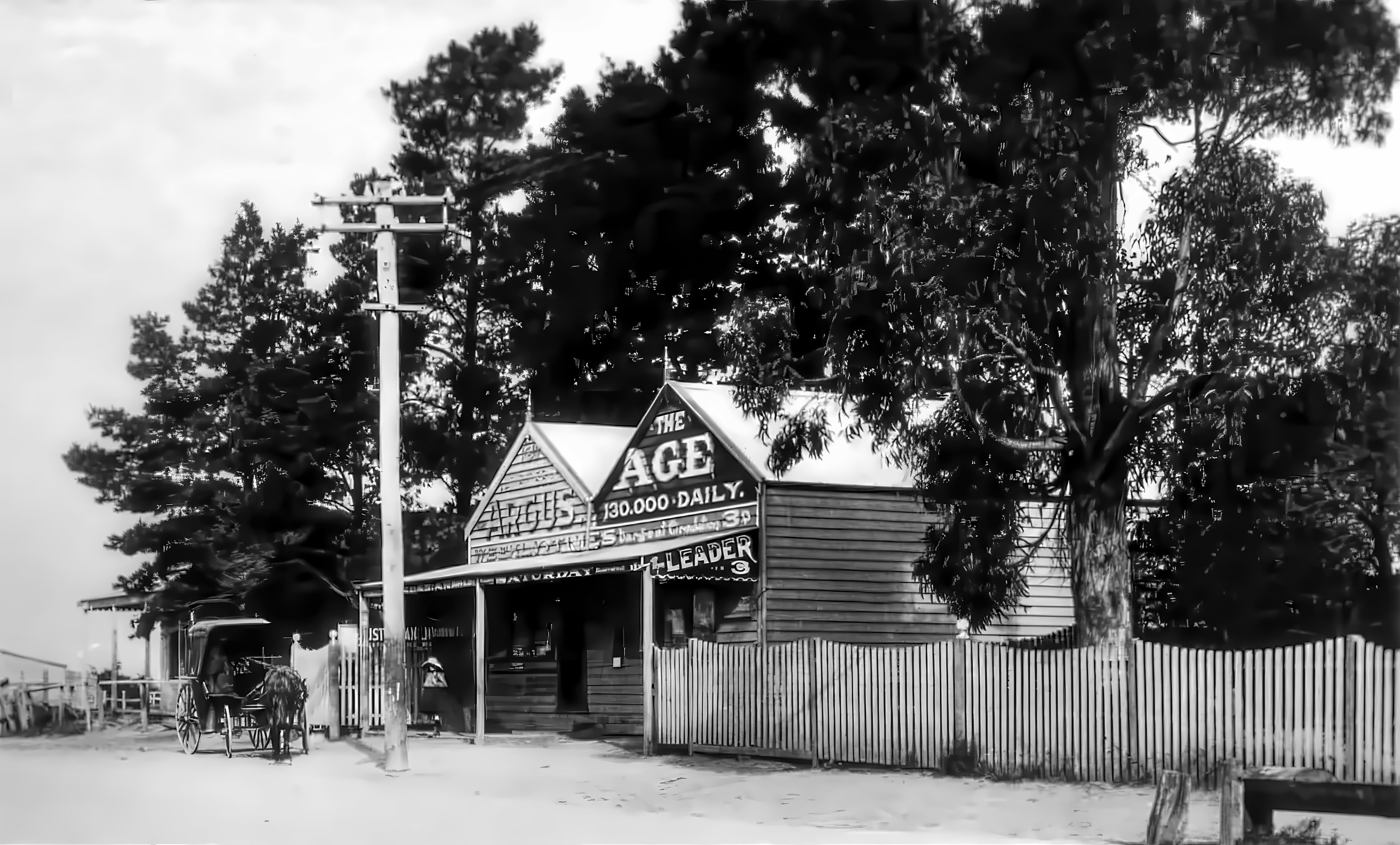
Doncaster Post Office c.1920
In January 1922, Beatrice Symons moved with her family to Bairnsdale, and W. Fidler became Postmaster for the next five years. In the 3 years following his term, Walhouse, McClaren, Dalrymple and F. E. Hoare held the position. Then, in 1930, A. J. Affleck, who had been in the district for three years, was appointed Postmaster. He continued to run the Post Office and store for 19 years with the help of his father and brother.
In 1949, the Afflecks sold the business, and A. J. Williams became Postmaster for a period of 13 years. In 1954, he moved the Post Office to a new building across the road. A brick front was added to the old store. In 1962, following a fire, the old building was demolished, and Doncaster Central Arcade was built on the site.
During the 1960s, the Post Office briefly moved back across the road to a new shop before settling at its current location in Doncaster Shoppingtown.
Source: The Doncaster post office by Eric Collyer